›The Middle Ages in Modern Games‹: Dr. Robert Houghton über den IMC – Call for Papers 2021
Lukas Boch
Der ›International Medieval Congress‹ (IMC) in Leeds ist das größte Treffen von Mittelalterforschern und -interessierten in Europa. Vom 5. bis 8. Juli 2021 finden über vier Tage verteilt rund 800 Vorträge und Panels statt, die sich aus verschiedenen Perspektiven mit dem Mittelalter befassen. Das Thema für das nächste Jahr lautet „Klima“. Für den Themenbereich ›The Middle Ages in Modern Games‹ haben der ›Public Medievalist‹ und das ›Centre for Medieval and Renaissance Studies‹ der University of Winchester einen CALL FOR PAPERS (MEHR INFORMATIONEN AM ENDE DES INTERVIEWS) ausgeschrieben. Dr. Robert Houghton hat sich bereit erklärt, uns ein wenig mehr über den IMC und insbesondere über ›The Middle Ages in Modern Games‹ zu erzählen.
Note: The interview with Dr. Houghton was conducted in English. We have published it for our non-German guests further below.
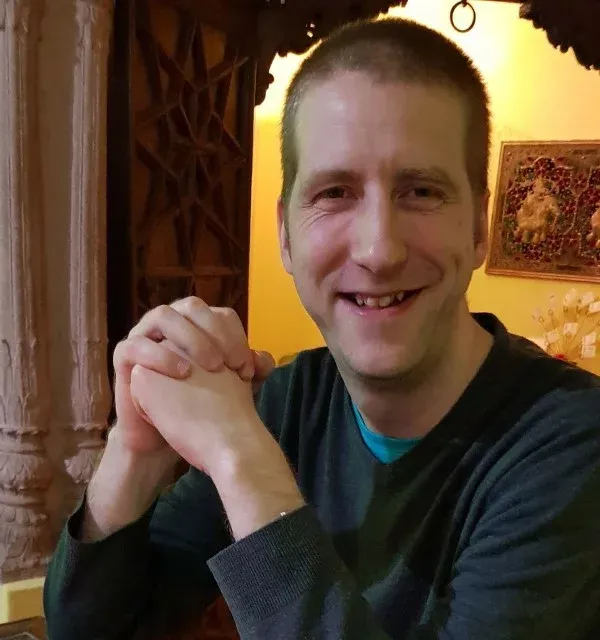
Robert Houghton ist Dozent für frühmittelalterliche Geschichte an der University of Winchester. Seine Forschung konzentriert sich auf politische und soziale Beziehungsnetzwerke in Italien um 900 bis 1120. Außerdem beschäftigt er sich ausführlich mit der Rolle des Mittelalters in Computerspielen. Rob ist der Senior Games Editor beim Public Medievalist und war als Berater zu Crusader Kings II tätig. Er twittert @RobEHoughton.
The Middle Ages in Modern Games
Mittelalter Digital: Willkommen Dr. Houghton und danke, dass Sie sich die Zeit genommen haben, uns etwas über den IMC und insbesondere über den Themenbereich ›The Middle Ages in Modern Games‹ zu berichten. Warum „Modern Games“ auf einer wissenschaftlichen Mediävistentagung?
Dr. Robert Houghton: Spiele mit mittelalterlichen Elementen werden für jeden, der über das Mittelalter lehrt oder forscht, immer wichtiger. Tabletop- und Computerspiele können das Verständnis des Publikums für das Mittelalter erheblich beeinflussen. Sie können wirkungsvolle und vielfältige pädagogische Instrumente sein und in einer unglaublich vielfältig und efffektiven Weise die Lehre unterstützen. Sie können sogar als Gegenstand zur Vermittlung und Durchführung von Forschung dienen. Wir müssen darüber sprechen, wie Spiele Geschichte präsentieren.
Dazu müssen wir aber fach- und institutionsübergreifend reden. Historiker, Literaturwissenschaftler, Archäologen, Spiele- und Medienwissenschaftler sowie Angehörige anderer Fachrichtungen haben alle ein Interesse an der Erforschung dieser Spiele. Wir müssen über nationale Grenzen und andere Trennungen hinweg miteinander sprechen: Weltweit haben sich sehr unterschiedliche Spielkulturen entwickelt, die viel voneinander lernen können. Am wichtigsten ist vielleicht, dass wir die Vertreter der Industrie – diejenigen, die tatsächlich Spiele herstellen – in alle Gespräche einbeziehen müssen.
Mittelalter Digital: Da können wir nur zustimmen! Auch in Deutschland wächst die wissenschaftliche Beschäftigung mit Videospielen. (In Deutschland hat in diesem Feld der ›Arbeitskreis Geschichtswissenschaft und Digitale Spiele‹ (AKGWDS) Pionierarbeit geleistet; Anm. d. Red.) Warum sollte Ihrer Meinung nach ausgerechnet der IMC der richtige Ort für einen solchen Austausch sein? Und wie kam es zur Einrichtung des Themenbereichs ›The Middle Ages in Modern Games‹?
Der ›International Medieval Congress‹ (IMC)
Dr. Robert Houghton: Der ›International Medieval Congress‹ (IMC) ist das größte Treffen von Historikern und Gelehrtern, die sich mit dem Mittelalter beschäftigen, in Europa. Es deckt ein breites Spektrum von Epochen, Regionen und Themen ab und hat Teilnehmer aus der ganzen Welt und aus allen akademischen Bereichen. Es ist ein großartiger Ort, um neue Ideen zu präsentieren und neue Gebiete zu erforschen: Also ein idealer Platz, um über das Mittelalter in Modern Games zu sprechen.
Der IMC ist gewaltig. Er besteht aus etwa 800 Sessions an vier Tagen (5. bis 8. Juli 2021). Die Sessions bestehen jeweils aus drei bis vier Papern, die jeweils eine Stunde dauern, wobei eine halbe Stunde für Fragen zur Verfügung steht. Ungefähr 25 Sitzungen laufen parallel, sodass immer eine große Auswahl zur Verfügung steht.
Teilnehmer können einzelne Paper direkt bei den Organisatoren der Konferenz einreichen, die versuchen werden, verwandte Gruppen von Beiträgen zu Sitzungen zusammenzufassen. Typischer ist es jedoch, komplette Sitzungen beim Kongress einzureichen: Dies stellt sicher, dass ein Beitrag neben ähnlichen Arbeiten präsentiert wird, und trägt dazu bei, ein größeres Publikum zu erreichen. Größere Gruppen von Papern können als Themenbereiche bestehend aus mehreren Sessions eingereicht werden, wodurch eine Minikonferenz innerhalb des größeren IMC entsteht.
Dr. Victoria Cooper, Nicolas Huss und ich haben den Themenbereich ›Das Mittelalter spielen‹ in den Jahren 2019 und 2020 mit 20-25 Referenten pro Jahr organisiert. Als der IMC 2020 abgesagt wurde, haben wir die meisten Beiträge im Rahmen der Twitter-Konferenz ›The Middle Ages in Modern Games‹ (@MidAgesModGames, #MAMG20) online gestellt.
Aufbauend auf diesen Veranstaltungen gehen wir im Jahr 2021 auf den IMC zurück. Wir planen für dieses Jahr acht bis zehn Sessions und einige Diskussionsveranstaltungen in Form eines runden Tisches. Es besteht die Möglichkeit, aus dieser Veranstaltung eine Publikation zum Thema „Klima“ zu erstellen. Aber das vornehmliche Interesse der Veranstaltung ist die Entwicklung eines internationalen Forschungsnetzwerks.
Klima als Thema in „mittelalterlichen“ Spielen?
Mittelalter Digital: Vielen Dank für diese ausführliche Antwort! Vielleicht können Sie uns noch etwas zu den Hintergründen sagen, die „Klima“ zum Topthema der nächsten IMC gemacht haben: Inwiefern ist dieses Thema für das Mittelalter und dessen Rezeption in Videospielen von Bedeutung?
Dr. Robert Houghton: Jedes Jahr wählen die IMC-Organisatoren unter der Leitung von Axel Müller ein Kongressthema, um der Veranstaltung eine gewisse Kohärenz zu verleihen. Im Jahr 2021 lautet das Thema „Klima“. Wir haben „Klima“ als Thema für unseren Bereich ›The Middle Ages in Modern Games‹ im Jahr 2021 gewählt, zum Teil, um sich in den Rest des Kongresses einzufügen und damit ein breiteres Publikum anzusprechen, vor allem aber, weil das Thema tatsächlich gut zu aktuellen Themen rund um das Mittelalter und moderne Spiele passt.
Der Klimawandel ist offensichtlich ein wichtiges Thema unserer Zeit und hat in eine Reihe von historischen Spielen Eingang gefunden (›Civilization VI: Gathering Storm‹ ist ein gutes Beispiel). Naturkatastrophen wie Überschwemmungen, Hungersnöte und (vor allem) Seuchen haben alle eine zeitgenössische Resonanz und tauchen häufig in Spielen mit Mittelalterbezug auf.
Sie können als Spielmechanik (wie in ›Crusader Kings II‹ oder ›Foundation‹) oder als Elemente der Geschichte und Welt eines Spiels auftreten (›A Plague Tale: Innocence‹; ›The Black Death‹). Postapokalyptische Spiele von ›Fallout‹ bis ›Metro‹ 2033‹ verbinden oft (von Menschenhand geschaffene) Klimakatastrophen mit mittelalterlichen Strukturen oder Motiven.
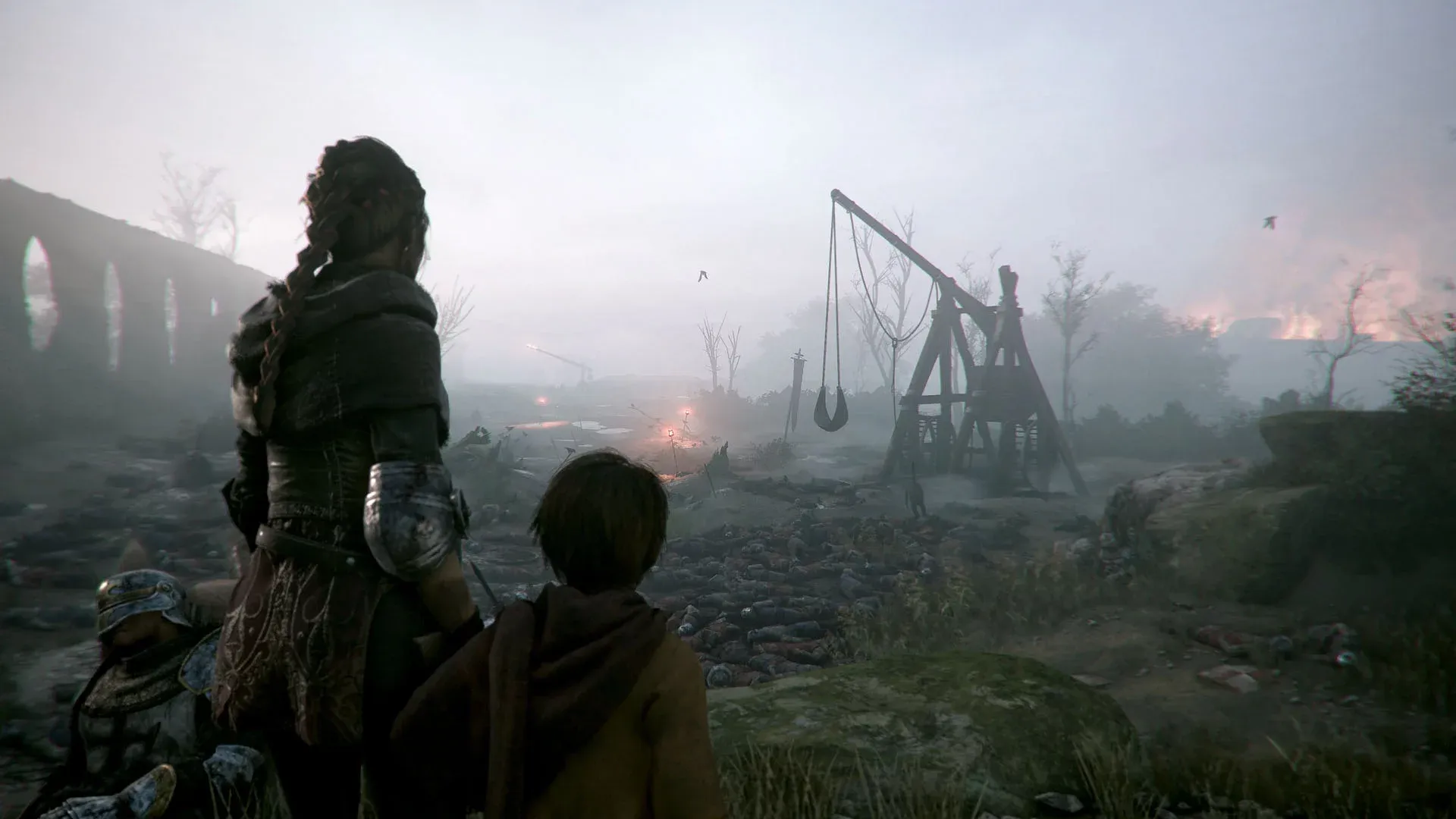
A Plague Tale: Innocence‹ vom französischen Entwickler Asobo gehört zu den erzählerisch dichtesten Games der letzten Zeit und zeichnet sich durch ein düsteres Klima von Angst und Schrecken aus.
In einem weniger dramatischen Ausmaß kann das Klima eine grundlegende Rolle bei der Darstellung einer Region oder einer Periode spielen. Fast jede spielerische Darstellung des mittelalterlichen Skandinaviens ist an der unwirtlich gefrorenen Landschaft zu erkennen (›God of War‹; ›Assassin’s Creed: Valhalla‹). Dieser Topos wird auch in Fantasysettings übertragen, die sich auf eine generische pseudo-nordische Kultur stützen (›Skyrim‹; ›The Witcher 3: Wild Hunt‹).
Diese stereotype Umgebung ist eine Design-Kurzschrift, die Spielern sagt, was sie von der Welt und ihren Bewohnern zu erwarten haben. An anderen Stellen machen sich Spiele mit Mittelalterbezug von ›Medieval: Total War‹ bis ›Patrizier‹ den Determinismus der Umwelt als wesentlichen Teil ihrer Mechanik zunutze: In diesen Spielen sind viele kulturelle und wirtschaftliche Elemente unbeweglich an bestimmte Orte gebunden und bilden die Grundlage dafür, wie das Spiel gespielt und damit die Vergangenheit repräsentiert wird.
Die Darstellung des Klimas bezieht sich auch auf mehrere andere Themen. Imperialismus und Kolonialismus sind untrennbar mit der Ausbeutung der natürlichen und menschlichen Umwelt verbunden, und dieses Gesellschaftsmodell ist in Spielen über das Mittelalter von ›Die Siedler von Catan‹ bis ›Anno 1404‹ weit verbreitet. Diese Themen stehen in engem Zusammenhang mit der Darstellung von Randgruppen in Spielen, die von den stets barbarischen und bösen Orks aus ›Dungeons and Dragons‹ über den Flirt mit einem ganz weißen Mittelalter in ›Mordhau‹, der Farbenblindheit von ›The Sims: Mittelalter‹, über die zunächst leeren Welt eines ›Minecrafts‹ bis hin zur Oberflächenrepräsentation eines globalen Mittelalters in ›Age of Empires II‹ reichen.
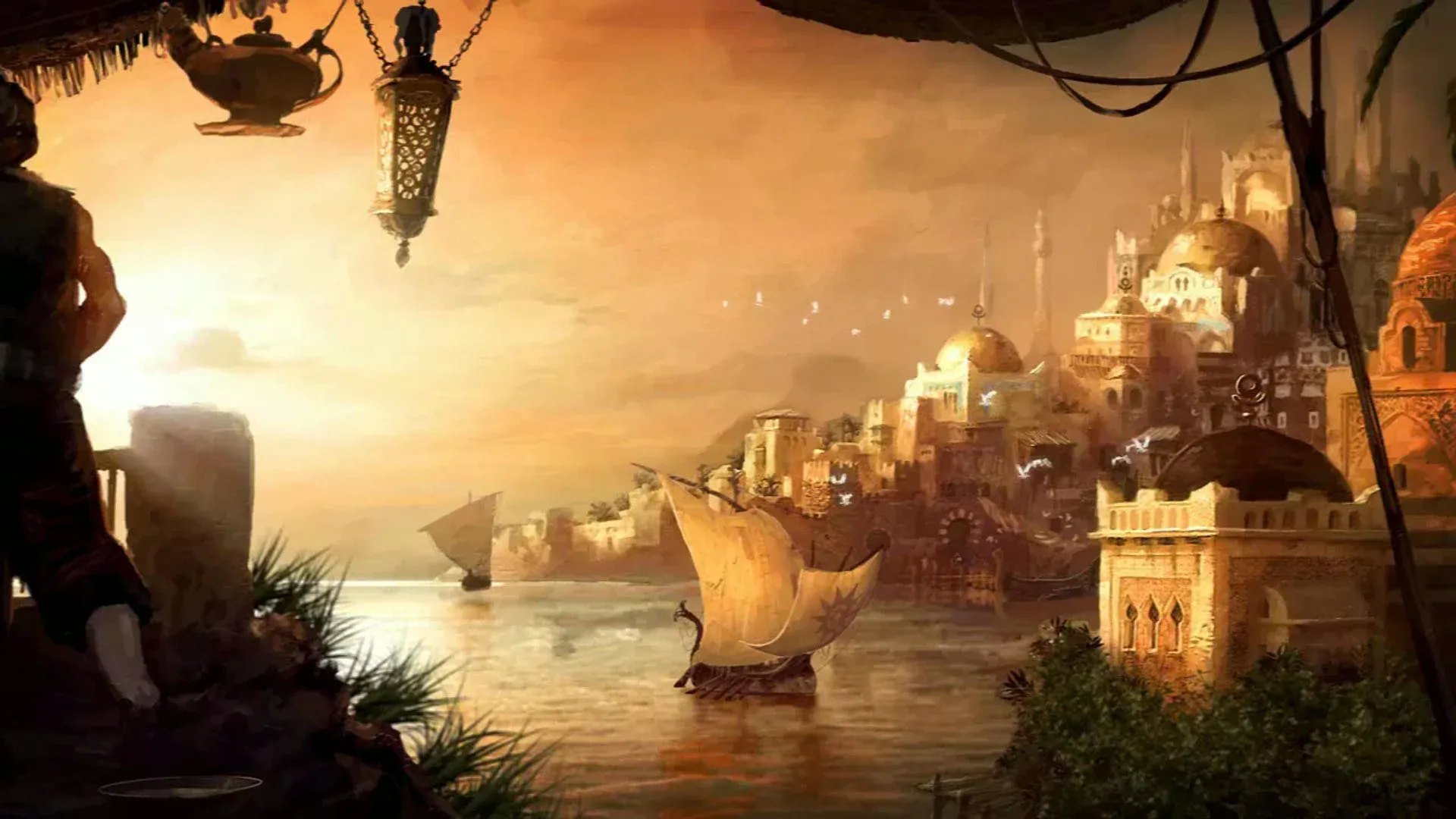
Das Klima in Videospielen kann auch dazu dienen, verschiedene Kulturen voneinander abzugrenzen, wie hier in ›Anno 1404‹ von den deutschen Studios ›Related Designs‹ und ›Blue Byte‹ entwickelt wurde.
Wir können uns auch mit anderen Arten des Klimas befassen. Das mittelalterliche politische und wirtschaftliche Klima ist ein häufiger Bestandteil von Spielen aller Genres. Kosmologische Klimata bilden die Grundlage für den Aufbau der Welt in Mittelalter- und Fantasyspielen. Moderne soziale Klimata beeinflussen die Art und Weise, wie Designer das Mittelalter darstellen und wie das Publikum diese Darstellungen interpretiert und beurteilt. Akademische Klimata können neue Gestaltungs- und Rezeptionsansätze ermöglichen, die von Queer Studies bis hin zu Beziehungsnetzwerken reichen.
Es gibt ein enormes Potential, über das „Klima“ im Zusammenhang mit dem Mittelalter und „Modern Games“ zu reden. Wir hoffen, dass Sie nächstes Jahr dabei sein können!
Mittelalter Digital: Wir werden definitv da sein! Vielen Dank für das Gespräch.
Call for Papers
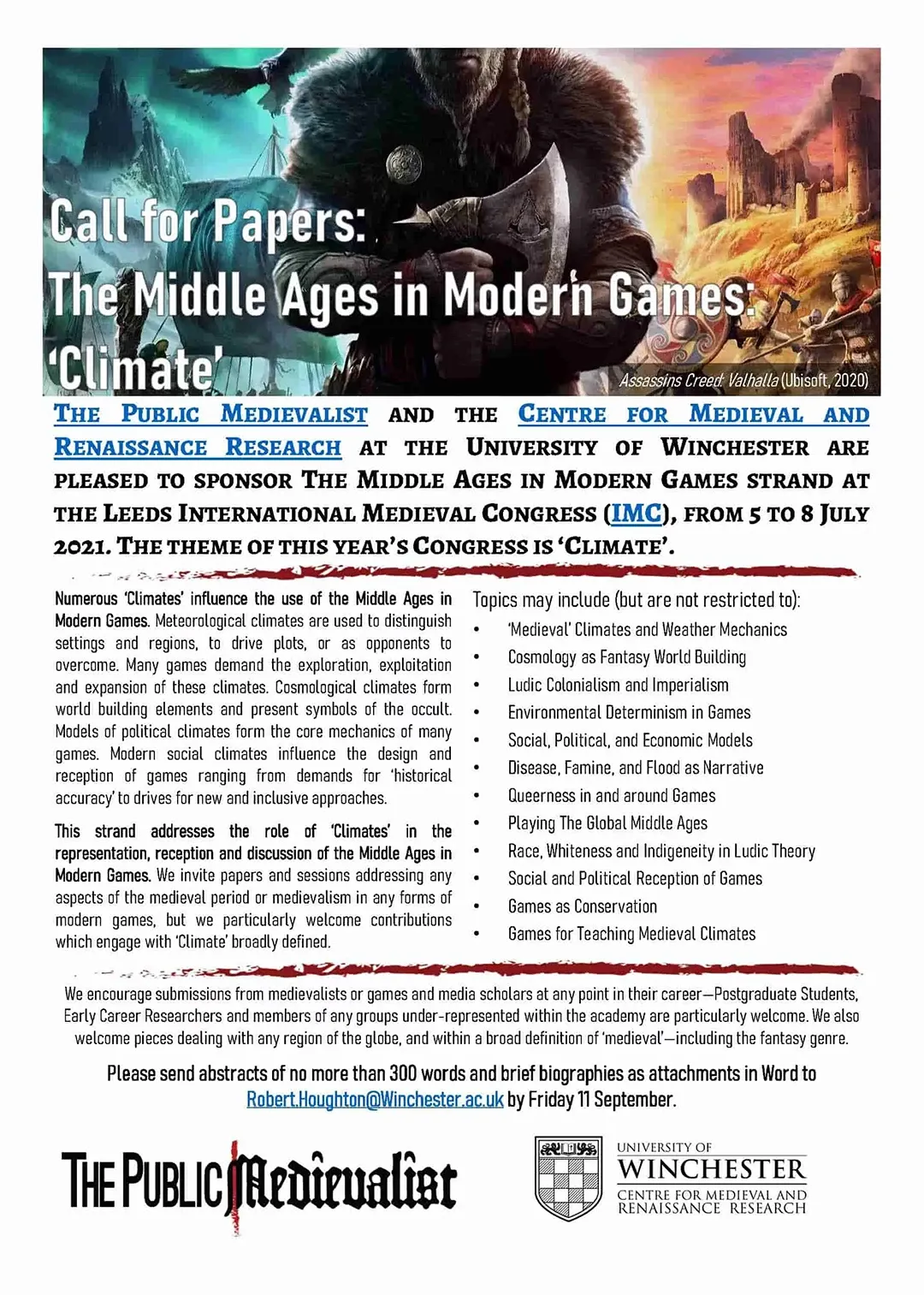
Wenn euer Interesse geweckt wurde und ihr gerne an der Tagung teilnehmen möchtet, schickt euren Vortragsvorschlag bis Freitag, den 11. September, an Robert.Houghton@Winchester.ac.uk. Alles Weitere findet ihr auf der folgenden Übersicht.
Das Interview führte Lukas Boch.
English Version: ›The Middle Ages in Modern Games‹: Dr. Robert Houghton about the IMC – Call for Papers 2021
The ›International Medieval Congress‹ (IMC) in Leeds is the largest meeting of medievalists and people interested in the Middle Ages in Europe. From 5-8 July 2021 over the course of four days around 800 lectures and panels will be held, dealing with the Middle Ages from a variety of perspectives. The topic for next year is „climate“. For the strand ›The Middle Ages in Modern Games‹ the Public Medievalist and the ›Centre for Medieval and Renaissance Studies‹ of the University of Winchester have launched a CALL FOR PAPERS (MORE INFOMRATION AT THE END OF THE INTERVIEW). Dr. Robert Houghton has agreed to tell us a little more about the IMC and especially about ›The Middle Ages in Modern Games‹.
Robert Houghton is a Senior Lecturer in Early Medieval History at the University of Winchester. His research focuses on political and social networks of relationship in Italy between c.900-c.1120, but he has also worked extensively on the role of the Middle Ages in Computer Games. Rob is the Senior Games Editor on The Public Medievalist and is credited as a Research Consultant on Crusader Kings II. He Tweets @RobEHoughton.
Mittelalter Digital: Welcome Dr. Houghton, thank you for taking the time to tell us about the IMC and in particular about the Middle Ages in Modern Games. Why a strand about Modern Games on an mediaeval scientific event?
Dr. Robert Houghton: Games with medieval elements are increasingly important for anyone who teaches about or researches the Middle Ages. Tabletop and computer games can have a substantial impact on their audiences understanding of the medieval period. They can be incredibly potent and diverse educational tools. They can even act as means to convey and conduct research. We need to talk how games present history.
To do this, we need to talk across disciplines and across institutions. Historians, literary scholars, archaeologists and games and media scholars and members of other fields all have a stake in the study of these games. We need to talk across national boundaries and other divides: very different cultures of games and gaming have emerged around the world and can learn a lot from each other. Perhaps most importantly, we need to include industry figures – those who actually make games – in any conversations.
Mittelalter Digital: Absolutely! Even in germany scientific interest in video games is growing (The ›Arbeitskreis Geschichtswissenschaft und Digitale Spiele‹ (AKGWDS) has done pioneering work in Germany; editor’s note). Why, in your opinion, is the IMC the right place for this kind of exchange? And when was the strand ›The Middel Ages in Modern Games‹ established on the IMC?
›The International Medieval Congress‹ (IMC)
Dr. Robert Houghton: The ›International Medieval Congress‹ (IMC) is the largest meeting of medieval historians and scholars in Europe. It covers a diverse range of periods, regions and themes and has participants from across the world and from across academic fields. It’s a great place to present new ideas and explore new fields: so it’s an ideal place to talk about the Middle Ages in Modern Games.
The IMC is massive. It consists of around 800 sessions over four days (5-8 July in 2021). Sessions consist of three or four papers presented over an hour with half an hour for questions. Around 25 sessions run in parallel so there’s always a lot to choose from.
Participants can submit individual papers directly to the conference organisers who will try to organise related groups of papers into sessions. But it is more typical to submit complete sessions to the Congress: this ensures that your paper will be presented alonside similar work and helps to ensure a larger audience. Larger groups of papers can be submitted as strands of multiple sessions creating a mini conference within the larger IMC.
Dr. Victoria Cooper, Nicolas Huss and I organised the strand ›Playing the Middle Ages‹ in 2019 and 2020 with 20-25 speakers each year. When the 2020 IMC was cancelled we moved most of the papers online as part of ›The Middle Ages in Modern Games‹ Twitter conference (@MidAgesModGames, #MAMG20).
Building on these events, we’re going back to the IMC in 2021. We’re planning for 8-10 sessions this year along with a couple of roundtable discussion events. There’s potential to create a publication from this event around the theme of ‚climate‘, but the main point of the event is to develop an international research network.
„Climate“ as an topic for Middle Ages and Modern Games?
Mittelalter Digital: Thank you for this detailed answer! Can you tell us something about the background that has made „climate“ the top topic of the next IMC and above all, how is this topic relevant to the Middle Ages in Modern Games?
Dr. Robert Houghton: Each year the IMC organisers led by Axel Müller choose a broad theme for the Congress to provide a some coherence to the event. In 2021 the theme is ‚Climate‘. We’ve adopted ‚Climate‘ as the theme for our The Middle Ages in Modern Games strand in 2021 partly to fit in with the rest of the conference and hence attract a broader audience, but mainly because the theme fits well with current issues around the Middle Ages in Modern Games.
Climate change is obviously a major contemporary issue and the topic has made its way into a number of historical games (›Civilization VI: Gathering Storm‹ is a good example). Natural disasters like floods, famine, and (especially) plague all have a contemporary resonance, and all appear frequently in games about the Middle Ages. They may appear as game mechanics (as in ›Crusader Kings II‹ or ›Foundation‹) or as elements of a game’s story and world (›A Plague Tale: Innocence‹; ›The Black Death‹). Post-apocalyptic games from ›Fallout‹ to ›Metro 2033‹ often combine (man-made) climate disaster with medieval structures or motifs.
›A Plague Tale: Innocence‹ from the French developer Asobo is one of the most narrative dense games of recent times and is characterized by a dark climate of fear and terror.
On a less dramatic scale, climate can play a fundamental role in a game’s portrayal of a region or period. Almost any in game representation of medieval Scandinavia is identifiable from the inhospitably frozen landscape (›God of War‹; ›Assassin’s Creed: Valhalla‹) and this caries over into fantasy games which rely on a generic pseudo-Nordic culture (›Skyrim‹; ›The Witcher 3: Wild Hunt‹). This stereotypical environment is a design shorthand which tells the player what to expect from the world and its inhabitants. Elsewhere, games from ›Medieval: Total War‹ to ›Patrician‹ make use of environmental determinism as key parts of their mechanics: in these games many cultural and economic elements are immovably tied to given locations and form the basis of how the game plays and so how it represents the past.
Portrayal of climate also relates to several other themes. Imperialism and colonialism are intrinsically linked to the exploitation of the natural and human environment and this model of society is rampant within games about the Middle Ages from ›Settlers of Catan‹ to ›Anno 1404‹. These issues connect closely to representation of marginalised groups within games ranging from the always barbaric and evil Orcs of ›Dungeons and Dragons‹, to the flirtation with an all-white Middle Ages in ›Mordhau‹, to the colour-blindness of ›The Sims: Medieval‹, to the empty world of ›Minecraft‹, to the superficial representation of a global Middle Ages in ›Age of Empires II‹.
The climate in video games can also serve to distinguish different cultures, as here in ›Anno 1404‹ developed by the German studios ›Related Designs‹ and ›Blue Byte‹.
We can also address other sorts of climate. Medieval political and economic climates are frequent elements of games of all genres. Cosmological climates form the basis for world building within medieval and fantasy games. Modern social climates influence how designers portray the Middle Ages and how audiences interpret and judge these portrayals. Academic climates may allow new design and reception approaches ranging from Queer studies to Relationship Networking.
There’s a huge amount to talk about around ‚climate‘ relating to the Middle Ages in Modern Games. We hope you can join us next year!
Mittelalter Digital: We’ll be there! Thank you for your answers.
Call for Papers
If the topic of the conference appeals to you and you would like to participate, send your proposal to Robert.Houghton@Winchester.ac.uk by Friday September 11th. You can find everything else on the following overview.
The Interview was conducted by Lukas Boch.